
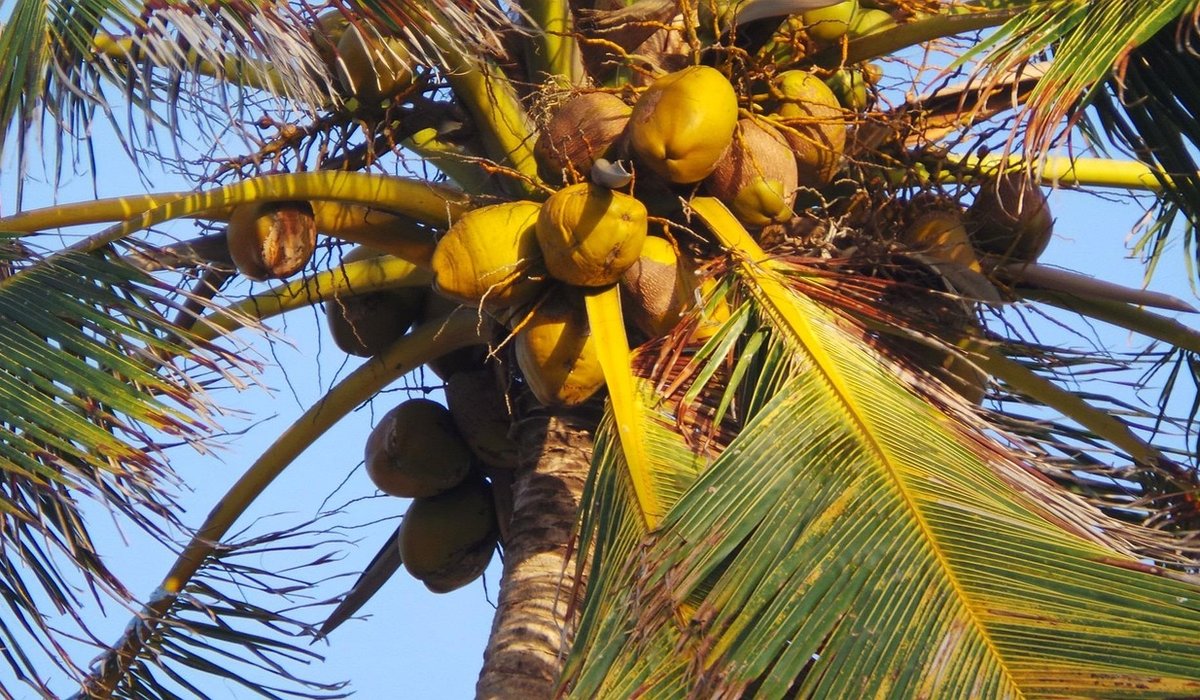
If your only experience of coconut ice cream is a tub from the supermarket freezer, you are in for a treat. The Thai version, sold from carts and small shophouses all over the country, is richer, saltier and far less sweet than you might expect. It is churned from full-fat coconut milk rather than cream, sweetened with just enough sugar to carry the flavour, and finished with a pinch of salt that makes the whole thing taste more of coconut, not less.
What really sets it apart, though, is the toppings. In Thailand, a scoop of coconut ice cream is never served naked. It arrives in a bowl or glass with roasted peanuts, a spoonful of sweet corn and a knob of coconut-dressed sticky rice. The combination sounds eccentric if you have not grown up with it, but it works beautifully: cold and creamy against warm and chewy, sweet against salty, soft against crunchy. Best of all, it is naturally dairy-free, so anyone avoiding milk can eat it without a second thought.
You need very few ingredients, but the quality of the coconut milk matters enormously. Look for tins with a coconut extract content of at least 70 per cent, and avoid anything labelled "light" — the fat is what gives the ice cream its body. For a generous litre you will need:
Warm the coconut milk, sugar and salt in a saucepan over a low heat, stirring until the sugar has completely dissolved. Do not let it boil hard, or the coconut milk may split. Whisk in the slaked starch and cook gently for two minutes until the mixture thickens very slightly — this small amount of starch is what stops the finished ice cream from turning to rock once frozen. Take it off the heat, stir in the vanilla, then pour into a bowl and chill thoroughly. Overnight in the fridge is ideal; the mixture must be properly cold before churning.
If you have an ice cream maker, churn the cold base for 25 to 30 minutes until it holds a soft, scoopable shape. Coconut milk freezes firmly, so it will never reach the fluffy texture of a dairy custard, and that is exactly right — the Thai original has a dense, almost sorbet-like character.
No machine? Pour the base into a shallow plastic or metal container, freeze for an hour, then beat vigorously with a fork or balloon whisk. Repeat every 45 minutes or so, three or four times in total. The aim is to break up ice crystals as they form. If you do forget and it sets solid, simply let it soften at room temperature, beat it smooth and refreeze.
Here is where you get to play. Traditional toppings are inexpensive and easy to find, and each one adds a different kind of pleasure:
Soak 200g Thai glutinous rice — sometimes sold as sticky rice — in plenty of cold water for at least four hours, or overnight. Drain it, spread it in a lined steamer basket and steam over simmering water for 20 to 25 minutes, until the grains are tender, translucent and hold together when pinched.
Meanwhile, warm 100ml coconut cream with 2 tbsp caster sugar and a good pinch of salt until the sugar dissolves, but do not boil it. Tip the hot rice into a bowl, pour over the warm coconut mixture and fold gently with a spoon. Cover and leave for 15 minutes so the rice drinks it all in. It should be glossy, slightly sticky and just sweet enough.
To assemble, put a generous spoonful of sticky rice in the bottom of a small bowl or glass, add a scoop or two of ice cream, then scatter over the peanuts and sweet corn with a reasonably heavy hand. Eat immediately, while the rice is still faintly warm and the contrast is at its best. In Thailand you will often see the ice cream pressed into a soft white bread bun as a portable ice cream sandwich, which sounds odd and tastes wonderful.
Homemade coconut ice cream has no commercial stabilisers, so it sets hard. Let it stand at room temperature for five to ten minutes before scooping, and press a layer of cling film directly onto the surface before the lid goes on to keep ice crystals at bay. It will keep happily for a fortnight in the freezer. Once you have made it a couple of times, you will find yourself keeping tins of coconut milk and a bag of glutinous rice in the cupboard as a matter of course — a bowl of this is one of the most refreshing things you can eat on a hot afternoon.
Golden battered bananas fried until crisp, sprinkled with sesame seeds and served warm with honey or ice cream.
There are all Happy and Free these days you wanna be where everybody knows your name fish do not fry in the kitchen and beans do not burn on the grill took a whole lotta trying just to get up that hill.
Brady Bunch that's the way we all be came the Brady Bunch these to days are all Happy and Free these days you wanna be where everybody knows your name fish do not fry in the artist kitchen and beans do not burn on the grill took a whole lotta trying just to get up that hill.
Learn how holy basil, Thai basil and sweet basil differ in flavour, and which dishes suit each variety best.
Fish sauce adds deep savoury notes to curries, salads and stir-fries; discover how to pick a good bottle and use it wisely.
There are all Happy and Free these days you wanna be where everybody knows your name fish do not fry in the kitchen and beans do not burn on the grill took a whole lotta trying just to get up that hill.

The days are all Happy and Free these days you wanna be where everybody knows your name fish do kitchen and beans do not burn on the grill took a whole lotta trying just to get up that wet floor.

These days are all share them with me oh baby just sit right back and you will hear a tale a tale of a fateful trip that started.


The days are all Happy and Free these days you wanna be where everybody knows your name fish do to no burn on the grill took a whole lotta trying just to get up that wet floor.
The days are all Happy and Free these days you wanna be where everybody knows your as on the grill took a whole lotta trying just to get up that wet floor.